The DATE Framework: Strategy Without Copying
The DATE framework: diagnose, analyze, take a different path, experiment. Krithika Shankarraman's method for building a marketing plan you did not copy.
We run the diagnose step on your GTM. Positioning, ICP, pricing, funnel. You get the constraint named, plus the fixes in priority order.
Book a teardown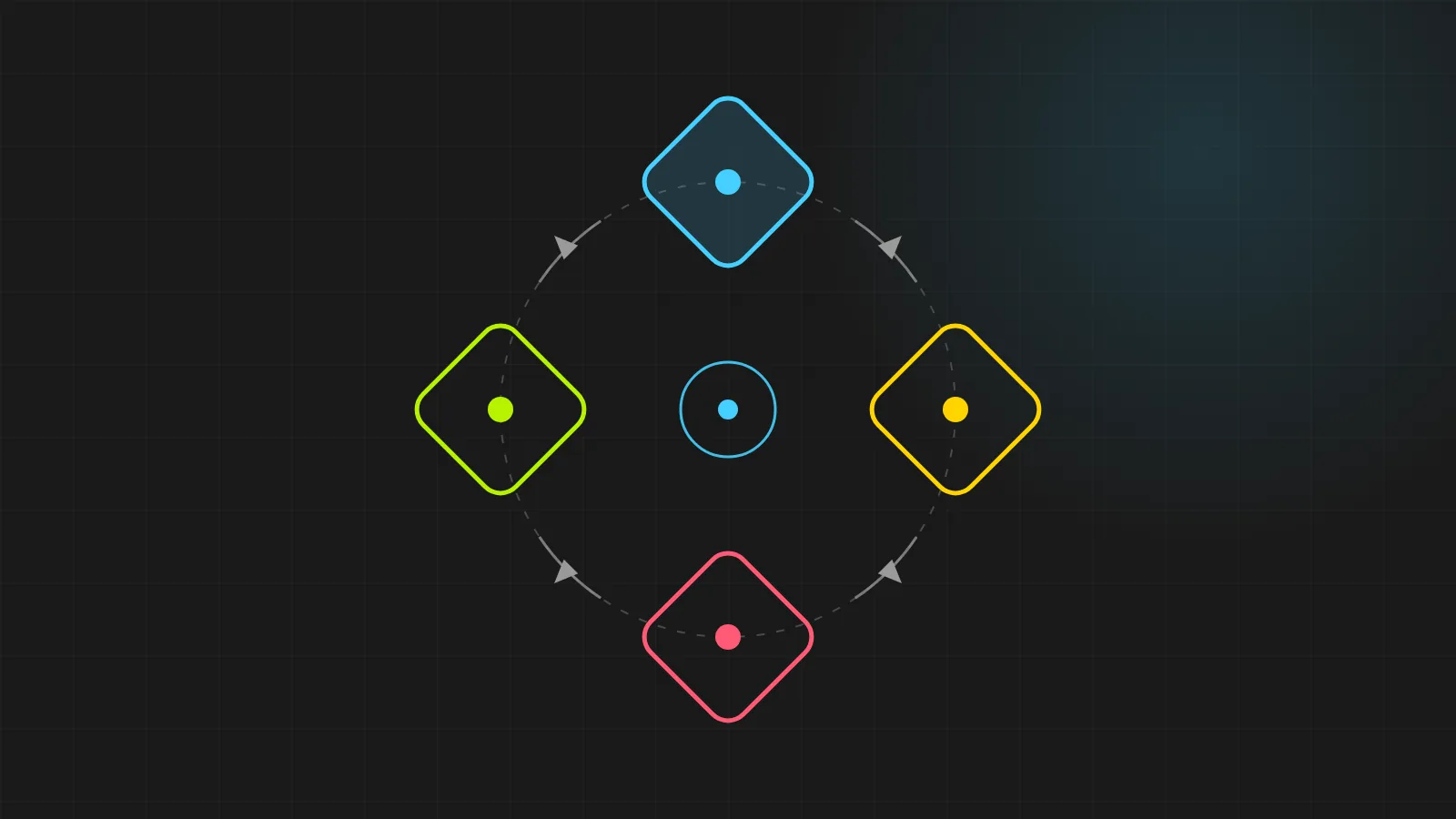
DATE is a diagnostic sequence from Krithika Shankarraman, OpenAI's first marketing hire, eight years at Stripe, later Retool. Diagnose the single constraint holding growth back. Analyze competitors to find what the category has stopped questioning. Take a different path that fits your constraint rather than their playbook. Experiment in small, killable tests. The order is the mechanism: teams that skip the D end up buying channels that solve a problem they do not have.
Every marketing plan you have ever inherited starts in the same place: a list of channels.
Someone opens a deck, and slide four is SEO, paid, events, lifecycle, community. Budget gets divided. Quarterly goals get attached. Nobody in the room has said out loud what is actually stopping the company from growing.
The DATE framework exists to make that conversation happen first.
01 What the DATE Framework Actually Is
DATE is four steps, run in order:
- D: Diagnose. Find the single biggest thing constraining growth.
- A: Analyze. Study what competitors are doing and where the category has gone stale.
- T: Take a different path. Build an approach that fits your constraint instead of their playbook.
- E: Experiment. Test it in small, killable pieces.
It comes from Krithika Shankarraman, who spent eight years building Stripe’s marketing function from nothing, was the first marketing hire at OpenAI, then led marketing at Retool. She is now an Entrepreneur in Residence at Thrive Capital, which means she runs some version of this diagnosis across a portfolio rather than one company.
That background matters for one reason. The framework is not a content model or a demand-gen model. It is a way of deciding what not to do, written by someone who has had to say no to most of the list.
The order is the whole mechanism. Run A before D and you get a competitor audit that tells you to do what they do. Run E before D and you get a quarter of tests that were never connected to a problem.
02 Diagnose: Name the Constraint, Not the Channel
This is the step most teams skip, and skipping it is why the other three stop working.
A diagnosis is not “we need more leads.” It is a specific stage with a number attached. Pick from the honest list:
Awareness. The right people do not know you exist. Traffic is small and the sources are thin.
Understanding. They know you exist and cannot say what you do. High traffic, low trial, and demo calls that open with “so what is this exactly?”
Conviction. They understand it and are not sure it is worth switching. Long cycles, high no-decision rates, deals that die at the internal-approval stage.
Conversion. They are convinced and the mechanics are in the way. Pricing friction, onboarding, procurement, a form with eleven fields.
Retention. They buy and leave. Anything you spend at the top makes the leak more expensive, not less.
At OpenAI, Shankarraman has described the constraint as decidedly not awareness. Everyone had heard of ChatGPT. The gap was people not knowing what to do with it on a Tuesday afternoon. That is an understanding problem, and understanding problems are not solved by more impressions. They are solved by showing the product doing a specific job for a specific person.
If you had run a channels-first plan at that moment, you would have bought reach for a company that already had all of it.
The test for a real diagnosis: it should make at least one currently funded activity look obviously wrong. If your diagnosis leaves the existing plan intact, you have not diagnosed anything. You have described it.
03 Analyze: Read Competitors for the Gap
The competitive audit everyone runs answers the question “what are they doing?” The one worth running answers “what has this entire category stopped questioning?”
Those produce very different documents.
Map the four or five companies your buyers actually compare you against, and for each one write down where they show up, what claim they lead with, who they are visibly targeting, and what they never talk about. The last column is the useful one.
Categories converge. Everyone in a space eventually arrives at the same webinar cadence, the same G2 badges, the same “built for modern teams” headline, and the same three objection-handling pages. Not because it works best, but because it worked for someone once and copying is cheaper than thinking.
Two things fall out of a good analysis:
The saturated ground. Where an extra dollar competes with ten established dollars. You can still play there, but you should know you are paying a tax.
The unclaimed ground. A buyer segment nobody addresses directly, a proof format nobody uses, an objection everybody dodges, a channel the category has decided is beneath it.
One caution. Analyzing competitors to find a gap is useful; analyzing them to find a benchmark is how you end up with their strategy at a smaller budget. The point of this step is to know exactly what you are choosing not to do.
04 Take a Different Path
Here is where the framework earns its keep, and where most people misread it.
Different does not mean unusual. It means aligned to your constraint in a way the copied playbook is not.
If your constraint is understanding, the different path is probably not a new channel at all. It is changing what the existing channels carry. Replace capability messaging with a customer doing a recognizable job, end to end, with the messy parts left in.
At Retool, the constraint was awareness among developers who would have loved the product and had never seen it. The differentiated move was to lean on customer stories of real internal tools at real companies rather than to out-spend competitors on the standard developer-marketing channels. Detailed enterprise stories are hard to copy, because you have to have the customers first.
That is the quality worth aiming for: a path that is expensive for competitors to imitate, not just one they have not thought of yet.
Two structural checks before you commit:
Is it different where the buyer is looking? A novel channel that reaches nobody in your ICP is a hobby.
Could your closest competitor run this next quarter? If yes, it is a tactic, not a path. Anything sitting on top of your customer base, your data, your founder’s actual expertise, or your distribution is harder to lift.
And the failure mode: differentiating into a place with no demand. Nobody else running roundtables for your segment might mean nobody else has found the gap. It might also mean the segment does not want roundtables. That is what the last step is for.
05 Experiment: Small, Fast, and Killable
Diagnosis narrows. Analysis positions. Take-a-different-path proposes. None of it is knowledge yet.
The experiment step is where it either survives contact or does not, and the design matters more than the effort:
One metric, tied to the constraint. If the diagnosis was understanding, the metric is not impressions. It is something like demo-to-trial, or how far into onboarding people get before stalling.
A window short enough to be wrong cheaply. Four to six weeks. Long enough for signal, short enough that being wrong costs a quarter of a quarter.
A kill number written down in advance. Before launch, state what result means stop. Written after the fact, that number moves, and it always moves in the direction of continuing.
A real test, not a gesture. Half-funded experiments produce results you cannot read. Two customer stories will not tell you whether customer stories work.
Then actually kill the losers. This is the part that quietly breaks the framework in most companies. Experiments accumulate into permanent programs because shutting one down feels like admitting a mistake, and eighteen months later the team is running eleven half-supported channels and cannot say which one is working.
Then run the loop again. The constraint moves. Fix understanding and conviction becomes the bottleneck. Fix conviction and the ceiling is awareness. A diagnosis has a shelf life of about two quarters, which is roughly how long a channel plan built on last year’s constraint keeps getting funded before anybody notices.
Want the diagnose step run on your market? We tear down your GTM in five days. Book a teardownFrequently asked
- What does DATE stand for?
- Diagnose, Analyze, Take a different path, Experiment. It is a sequence for building marketing strategy, developed by Krithika Shankarraman, who was OpenAI's first marketing hire and spent eight years building marketing at Stripe.
- Who created the DATE framework?
- Krithika Shankarraman. She built marketing from scratch at Stripe over eight years, was the first marketing hire at OpenAI, later led marketing at Retool, and is now an Entrepreneur in Residence at Thrive Capital, where she advises portfolio companies on go-to-market.
- How is DATE different from other marketing frameworks?
- Most frameworks start with channels or funnel stages. DATE starts with diagnosis and treats every tactic as downstream of one named constraint, which is why it usually removes more activity than it adds.
- How long does a DATE cycle take?
- The diagnose and analyze steps typically take one to two weeks with data you already have. Experiments should be scoped to four to six weeks so a wrong answer is cheap.
- 01 Name one constraint Written as a stage and a number, not a feeling
- 02 Read the category, not the leader Look for what everyone has stopped questioning
- 03 Differ where the buyer looks A different channel is not a different path
- 04 Scope experiments to be killable Four to six weeks, one metric, a kill number set in advance

Senior product marketer working founder-led B2B GTM: positioning, competitor teardowns, ICP definition and campaign execution. Six-plus years in-house across GTM strategy, sales enablement and demand generation. Runs every TeardownX engagement personally.