Why Founder-Led Sales Stalls at 30 Customers
Founder-led sales works beautifully until it does not. Here is the exact point it breaks, why it breaks there, and what to change first.
We run this same teardown on your GTM. Positioning, ICP, pricing, funnel. You get the fixes in priority order.
Book a teardown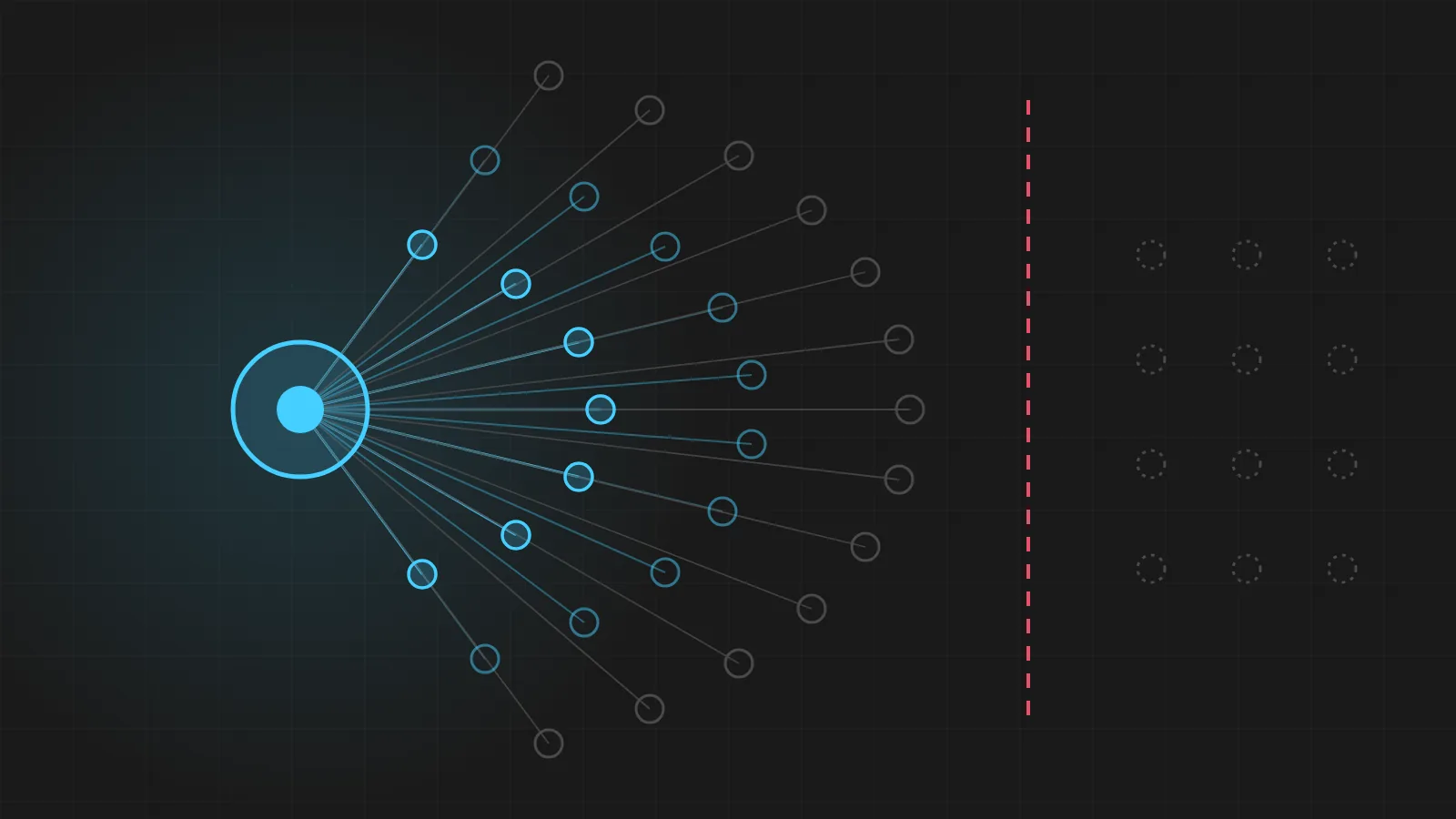
Founder-led sales does not break because the founder runs out of hours. It breaks because the reasons customers buy live in one head and were never written down, so the first hire inherits artefacts instead of a story.
You closed the first thirty customers yourself. Every one of them bought because you were in the room.
That is not a scaling problem. It is a transfer problem, and it shows up long before you hire.
01 The Thirty-Customer Wall
The wall is not headcount. It is the moment the pipeline needs more conversations than one person can hold in their head.
Up to about thirty, the founder is the compression algorithm. Every objection gets answered from memory, every proof point picked on instinct, every pricing exception justified by a gut read of how much the account is worth. None of that is written down, because it never needed to be.
Then the calendar fills. The conversations that used to get the full performance start getting a shortened one, and close rates slip for reasons nobody can name.
02 The Story Is the Bottleneck
The instinct at this point is to hire. A rep, an SDR, someone to take the top of the funnel off your plate.
But a rep does not inherit instinct. They inherit whatever is written down, and in most founder-led companies what is written down is a deck, a pricing page, and a handful of Slack messages. That is not a story. That is artefacts.
The gap shows up in the first month: the rep can describe what the product does but cannot explain why the last ten customers chose it over the obvious alternative. Buyers notice immediately.
03 Fix the Story Before the Headcount
Before you write a job description, write three things down.
Why the last ten customers actually bought. Not the feature they mentioned on the call. The situation they were in that made doing nothing worse than buying. If ten customers produce ten unrelated answers, you do not have a positioning problem you can hire your way out of.
The one claim your competitors cannot make. Structurally cannot, not merely have not yet. Anything they could add next quarter is not a wedge.
What you refuse to sell to. The accounts you have learned to walk away from are the sharpest description of your ICP you own, and they are the fastest thing to teach.
If those three fit on one page, a rep can carry them. If they do not, the next hire will be an expensive person who cannot sell, and the diagnosis will land on them instead of on the story.
Want the same wedge found in your market? We tear down your GTM in five days. Book a teardown- 01 Write the buying reasons down In the customer's words, not the deck's
- 02 Name the claim rivals cannot copy Structural, not a roadmap item
- 03 Define what you refuse to sell to The fastest thing to teach a new rep

Senior product marketer working founder-led B2B GTM: positioning, competitor teardowns, ICP definition and campaign execution. Six-plus years in-house across GTM strategy, sales enablement and demand generation. Runs every TeardownX engagement personally.